

doximityask
May 21, 2026
A Faster Way for Oncologists to Look Up Drug Dosing with AI

# Oncology
How Oncologists Use Doximity Ask for Instant Drug Dosing and Protocol Reference

Doximity Team
If you've ever found yourself mid-visit trying to remember a cumulative doxorubicin ceiling or pulling up a FOLFIRINOX schedule between patients, you know how much mental energy dosing questions can take up. Weight-based calculations, protocol timing, drug-specific thresholds, these come up constantly, and the answers need to be right.
A lot of oncologists have started using Doximity Ask for exactly these moments. It's fast, it speaks clinical shorthand, and it doesn't require logging into anything separate.
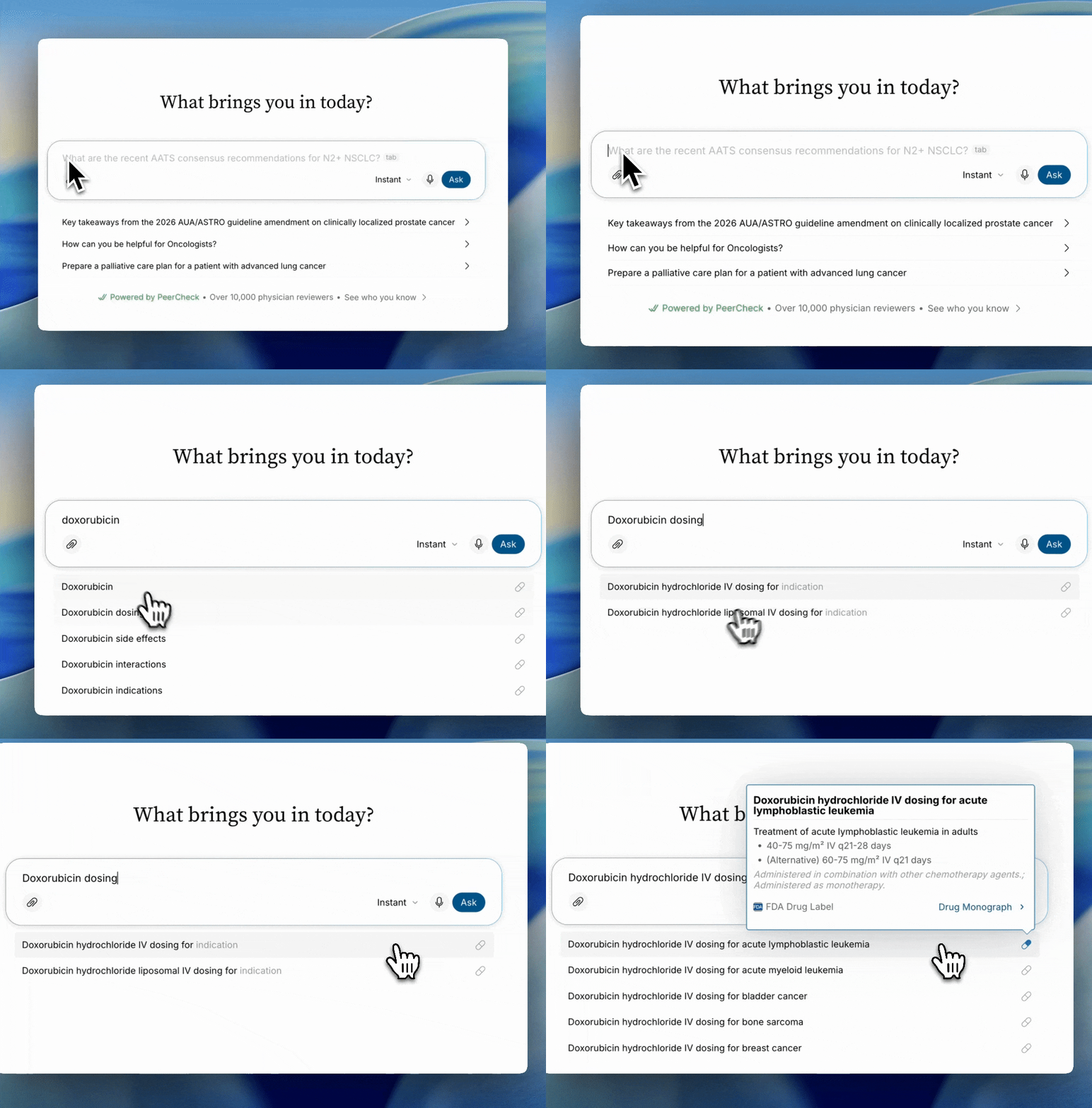
What makes it especially useful for dosing questions is that Doximity Ask has an integrated drug reference covering more than 3,200 monographs, including dosing, side effects, and interactions. That information is pulled directly from the FDA, so when you ask a dosing question, you're getting a standardized, reliable answer rather than something synthesized from general web content. For drug-specific queries in particular, that's a meaningful distinction.
Example prompts to try
- "Cumulative dose of doxorubicin?"
- "Dose range of octreotide acetate fast-acting for carcinoid syndrome three times a day"
- "What kind of therapy is tamoxifen and letrozole considered?"
- "Everolimus and pneumonitis"
Most of these are short, in-the-moment questions, the kind you might normally ask a colleague or look up between patients.
Why it works at the point of care
Because the drug reference is built directly into Doximity Ask, there's no need to open a separate tab or switch to another app. You ask the question, you get the answer, and the source is FDA monograph data. For oncology dosing especially, where precision matters, that combination of speed and reliability is hard to replicate with a general search.
Give it a try at Doximity Ask .
Comments (0)
Popular

Dive in
Related
Education
How Oncologists Use AI to Draft Clinical Notes Faster
By Doximity Team • May 20th, 2026 • Views 20
Education
How Oncologists Use AI to Manage Immunotherapy Toxicity
By Doximity Team • May 20th, 2026 • Views 36
Education
How Oncologists Use AI to Draft Clinical Notes Faster
By Doximity Team • May 20th, 2026 • Views 20
Education
How Oncologists Use AI to Manage Immunotherapy Toxicity
By Doximity Team • May 20th, 2026 • Views 36